

Formerly known as Google AdWords, Google Ads is a popular digital advertising system. With them, marketers can bid on given keywords so that the clickable ads get to appear in Google’s search results. We have gathered all important information on Google Ads and indicated whether or not they are worth your money. Therefore, we believe that by going through this piece, you will learn a lot to help you make a wise investment.
Is Google Ads Worth it?
Yes, Google Ads are worth your money, time, and effort. But again, this depends on various factors. The first thing is the payment that you make for the ad on Google Ads. This is quite straightforward because you only make the payment if people click on your ads. This is more like bidding against other site owners in the Google auction.
Also, it greatly depends on what happens after the visitor clicks on the ad. If internet users get to your website and convert to paying clients, then it is worth your money. However, if the conversion is not worth more than the cost of your ad, then Google Ads is not worth your money and time. The bottom line is that you need to make more money than you spend on Ads for it to be worth it.
More facts you need to know
Asking whether or not Google Ads is worth it is quite general. It depends on what your specific issue is. So up there, we presumed you are asking about the financial reward. Let’s begin by considering the first issue. If a business spends money to remain steady and operational, that expenditure is always worth it. But Google Ads is great and worth it only if you can make at least $1.01 for every $1 spent. In other words, the cost per click on an ad must be exceeded by the revenue per click that is generated by that specific ad.
It does not matter the cost of ad that you are paying for as long as you can generate some revenue from it, and that will count as your profit. You should work smart and start tracking your conversions. You should also work on tracking your cost per click to see how your online investment is doing.
The next thing has something to do with emotions. Usually, advertisers look at the cost of clicks on Google and get appalled. This is why you need to think carefully before paying for an ad. Also, note that the cost might be determined by the potential revenue that can be generated from the ad.
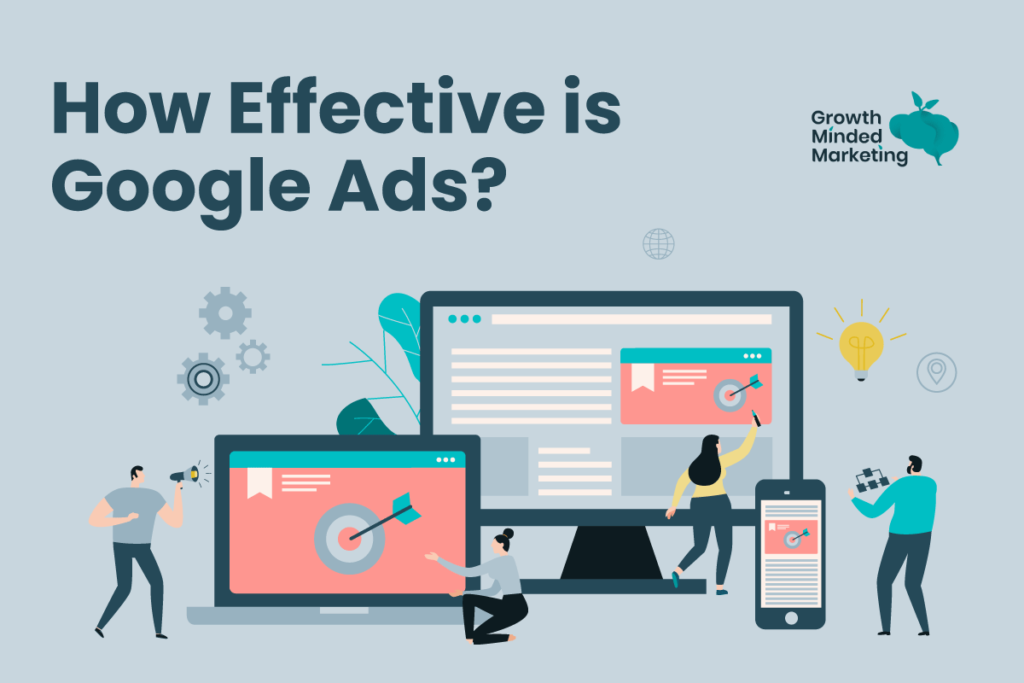
How Effective is Google Ads?
Google Ads is the one tool that many website owners are yet to learn how to utilise correctly. Again, as mentioned above, whether or not this tool is effective depends on how you utilize it in your campaign. You must keep an eye on the campaign as it runs so that you know what needs to be changed. After all, the market is quite dynamic, and you stand to lose a lot if you don’t keep an eye on your campaign.
Google ads are a bit more complex than you might think. It takes more than just hoping on Google, then running campaigns with the hope of getting high returns from it. It is something that calls for solid experience, talent, and skills to execute properly. You should be able to understand where things are heading in the near future and then make the necessary tweaking right on time to stay on top of the game.
Does Google Ads Work for Small Business?
When it comes to small businesses, every penny spent on Google Ads must be accounted for. To get results, the money spent must be well distributed to attract maximum results. The essential thing is getting to know the business and then understanding the targeted clients. Small businesses should also know the products and services that sell the most and the average ticket sale per client. Also, they should know the fast and slow days and how to handle them properly. These components are essential and can help small businesses gain a lot when running Google Ads campaign.
However, the most important information that small businesses ought to have is a deep understanding of their competition. Get to know what the competitors are doing. The more you know and understand what your competitors are doing, the better you can devise a strategic plan to double-cross them and take all their clients. However, you must know that there are loyal customers and bargain shoppers. Therefore, you need to do everything possible to weed out the bargain shoppers from your competitors and make them your loyal clients. This is a bit easier since the bargain shoppers are usually looking for the best deal.
How Much Should You Spend on Google Ads
If you are just getting started on Google Ads, you might think that the same aspects that determine the costs on other advert channels also affect Google Ads. But Google Ads is quite different than other advertising channels, and it has its rules of thumbs to have in mind. It is crafted more like an auction marketplace where the best bidder carries the day. The product that is sold by Google Ads is the website visitors. Therefore, it relies largely on your industry than the market itself.
If you are looking to know the exact amount you should spend on Google Ads, the right answer is; it depends. The fact is that you are not spending money on Google Ads itself, but you are spending money on a variety of mini-markets inside of it. Note that since you will be working with keywords, each one of them comes with a bunch of factors to consider, and a price attached to it.
When you bid for clicks, or rather the online visitors, you are not making the same bid as the rest of the website owners worldwide. You are only making bids on the keywords that make sense to your niche and that of your competitors.
When it gets to the much you need to spend on Ads, it depends on the value of the campaign you are looking to run. It also matters what you and your competitors think that a click from a visitor would be worth. And depending on the niche or industry, website visitors have a wide range of value.
How Long Does it Take for Google Ads to Work?
Today, Google Ads is the quickest way to get traffic to your online business. But how long does it take to get results? Though it is widely affected by the scope of factors such as the niche, business location, and level of competition, and the search volume of the keyword you have selected, there is another answer.
It is the duration taken by the Google algorithm to collect data and learn, and the time that you take to make the necessary changes to optimize your campaign to match the data that is collected.
Once the algorithm has collected enough data, your website will be listed as eligible, and that is the same data you will need to make some changes to optimize the campaign based on your objectives and goals. Once you have researched and selected your keywords and location well and set up the campaign, you will start getting results for your business. So to answer your questions, it takes seven times the number of changes made, which is about three months.
The Final Word
Google Ads works perfectly. But unless you know what needs to be done at the right time, you might think that it is not worth the money or effort. Learn as much as you can to understand your industry, competition, and other factors relevant to Google Ads.


Find out how our Google Ads management services can help your business grow.